Showing posts with label Travel. Show all posts

Friday, July 06, 2012

Travel Plans: France 2017

That title sounds rather futuristic doesn't it? Traveling to France in 2017 may feel like I'm planning way too far in advance but I like to plan ahead and this way I feel as if I'll have more of an incentive to research, plan and actually go to France. This post is my affirmation to travel. Why 2017 you say? Sentimental reasons mostly. That year marks 100 years since the Battle of Vimy Ridge, a very important event in Canadian history and one where my great grandfather fought. I plan on attending Remembrance Day celebrations at the Vimy Ridge Memorial, a beautiful monument to all the men that gave their lives in that battle.

But while I'm there I plan to visit other parts of France. After all, traveling overseas can be expensive and I don't want to waste any time that I have in the area. The means extensive research though so I've purchased the Eyewitness Travel Guide for France. I swear by these guides ever since I went to Greece. They are heavier to carry because of the glossy pages and photos included but I found it well worth it. These guides show you what you'll be seeing to give you an idea of what's available. While I haven't read the guide yet, I do plan on making a list of the things I want to see but for the meantime I started with things off the top of my head.

Joan of Arc Statue
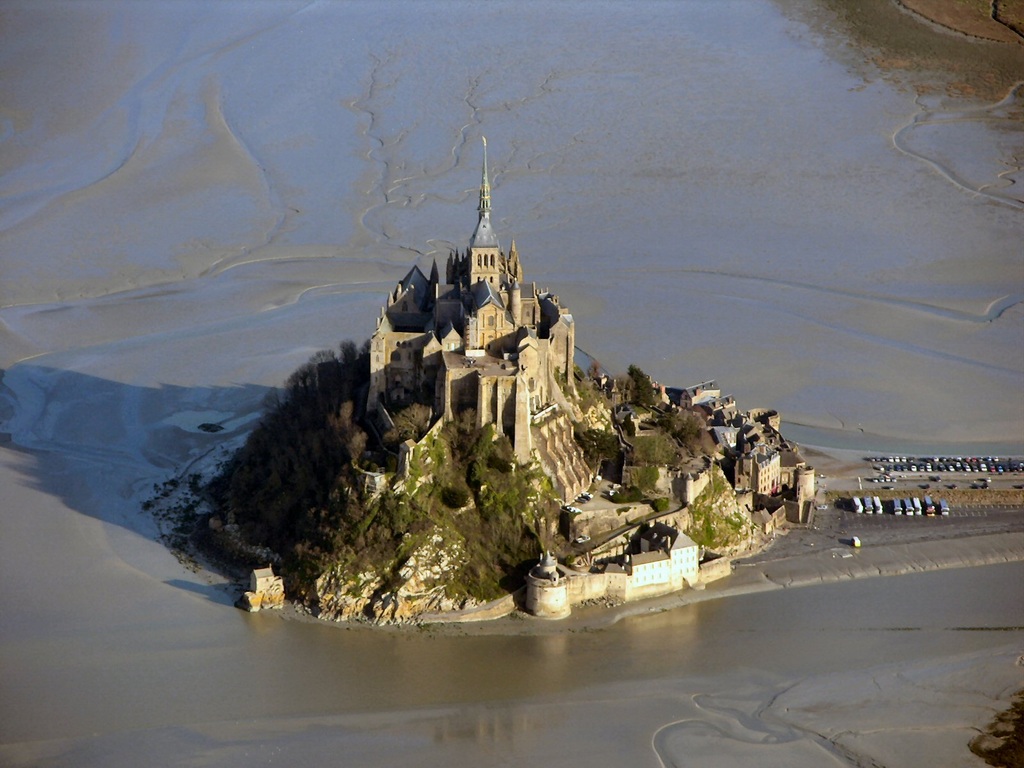
Mont St Michel
Arc de Triomph
The Louvre
Versailles
Pont du Gard
Vimy Ridge
Eiffel Tower
The Alps
Pont du Gard
Bayeux Tapestry


Lascaux Caves
Juno Beach
Chartres Cathedral
Musee d’Orsay
Notre Dame
Notre Dame at Rheims
Lourdes
The Chamoix Valley
Arenes de Nimes
Abbey of St Denis

I also have a list of books that are about France, take place in France or are written by someone of French nationality that I'd like to read. Almost all the authors are male though so if anyone has any suggestions for female authors please let me know.

My Life in France – Julia Child
Tender is the Night – F Scott Fitzgerald
The Hunchback of Notre Dame – Victor Hugo
Les Miserables – Victor Hugo
Swann’s Way – Marcel Proust
All Quiet on the Western Front – Erich Maria Remarque
Cyranno de Bergerac – Edmond Rostand
Death in the Clouds – Agatha Christie
The Man in the Iron Mask – Alexandre Dumas
Les Dames aux Camelias – Alexandre Dumas
A Sentimental Education – Gustave Flaubert
Saint Joan – George Bernard Shaw
Joan of Arc – Mark Twain
Lord Hornblower – CS Forester

Le Bourgeois Gentilhomme – Moliere
Life, a User’s Manual – George Perec
La Bete Humaine – Emile Zola
The Lais of Marie de France – Marie de France
Un vie – Guy de Maupassant
The Mystery of the Yellow Room – Gaston Leroux
The Phantom of the Opera – Gaston Leroux
The Incredible Painting of Felix Clousseau – Jon Agee
The White Company – Sir Arthur Conan Doyle
Accursed Kings Series – Maurice Druon
The House in Paris – Elizabeth Bowen
The Little Prince – Antoine de Saint-Exupery
Vertigo – Boileau & Narcejac
The Gallic War – Julius Caesar

Kiki’s Memoirs – Kiki de Montparnasse
A Moveable Feast – Ernest Hemingwy
A Social History of the French Revolution – Norman Hampson
A Son at the Front – Edith Wharton
A Year in Provence – Peter Mayle
Birdsong – Sebastian Faulks
The Bourne Identity – Robert Ludlum
Day of the Jackal – Frederick Forsyth
Anais Nin Diaries
The Historian – Elizabeth Kostova
Paris: The Secret History – Andrew Hussey
The Mystery of the Blue Train – Agatha Christie
Old Goriot – Honore de Balzac
Paris 1919 – Margaret MacMillan
Possession – AS Byatt
The Razor’s Edge – Somerset Maugham
Scaramouche – Rafael Sabatini
The Sun Also Rise – Ernest Hemingway
The Tropic of Cancer – Henry Miller

There’s also a list of movies by French directors that I would like to watch.

Beauty and the Beast (1946)
The 400 Blows (1959)
Amelie (2001)
The Story of Adele H (1975)
Orpheus (1950)
Stolen Kisses (1968)
Les Vampires (1915)
Les Diabolique (1955)
La Grand Illusion (1937)
Belle de Jour (1967)
Passion of Joan of Arc (1928)

Jules and Jim (1962)
The Triplettes of Belleville (2003)
Last Year in Marienbad (1961)
Port of Shadows (1938)
Wages of Fear (1953)
Pepe le Moko (1937)
Au Hasard Balthazar (1966)
Elevator to the Gallows (1958)


Umbrellas of Cherbourg (1964)
The Bride wore Black (1968)
Mr. Hulot’s Holiday (1953)
Pierrot le Fou (1965)
Band of Outsiders (1964)
Breathless (1960)
Contempt (1963)
My Life to Live (1962)
Fahrenheit 451 (1966)
2 English Girls (1971)

Last Metro (1980)
Day for Night (1973)
Alphaville (1965)
Un Coeus en Hiver (1992)
La Reine Margot (1994)
Plein Soleil (1960)
Pickpocket (1959)
Lady Chatterley (2006)
Le Samourai (1967)
La Vie En Rose (2007)
Brotherhood of the Wolf (2001)
Three Colours: Blue (1993)
Cache (2005)
Les Enfants du Paradis (1945)
Rififi (1955)
Le Regle du Jeu (1939)
La Haine (1995)
The Diving Bell and the Butterfly (2007)
Jean de Florette/Manon de Sources (1986)
A Prophet (2009)
Playtime (1967)

And painters! I can’t forget the French painters. I've only taken one post-modern art history course in my life and despised almost every minute of it. That's a story for another day but the point is that I fell in love with art.

Jean-Baptiste Louis Gros
Jean Baptiste-Camille carot
Alexandre Gabriel Decamp
Theordore Rousseau
Jean-Francois Millet
William-Adolphe Bouguereau
Camille Pissarro
Edouard Manet
Edgar Degas
Paul Cezanne

Claude Monet
Pierre-Auguste Renoir
Gustave Caillebotte
Paul Gaugin
Edmond Marie Petitjean
Georges Seurat
Achille Zo
Paul Signac
Jean-Honore Fragonard
Elisabeth Vigee-Lebrun


If you've ever been to France or have any suggestions I would love to hear your thoughts. I'm also planning on starting French lessons in the fall. I worry that I might get French overload and get absolutely sick of the place before I even get there but the point is that this is supposed to be a multi year project. I'm giving myself lots of time to do this.

Tuesday, October 07, 2008

Spain by Jan Morris

"Spain is one of the absolutes. Most States nowadays are willy-nilly passive, subject always to successive alien forces. Spain still declines in the active mood. She is not a great Power, but in her minor way she is one of the prime movers still - still a nation that sets its own standards." - page 22

Jan Morris, travel writer extraordinaire shows us an in-depth look at Spain in which we traverse time and space, examining the rich and varied history of the country. We are exposed to Spain's triumph as a world power and her slow but inevitable slip into relative obscurity on the world stage. We see her domination of world events and her global isolation, her tolerance and persecution of peoples, her Jekyll and Hyde personality. This duality plays out over the history, the landscape and the peoples of Spain.

The Good:

One thing I believe is most important in travel books is providing a flavour of the country to readers. Jan has this talent in spades. Here's a taste of Spain in Jan's description her description of the running of the bulls in Pamplona.

"Blood runs, men are often wounded, poor padded blindfold horse are gored, the bull inevitably dies and is dragged out for beef. They crowd all around, that Greek chorus of the bull-ring, with its little cigars clenched between its teeth, its cardboard sun-visors on its foreheads, its one-peseta cushions plumped beneath its bottoms on the hard seats - the crowd all around seems animated, to the foreign eye, chiefly by a brutish lust for blood." - page 31

Morris ties in the history of Spain to explain her slow evolution from world power to industrialized nation. She portrays the Spanish as a fearless and sometimes brutish people, quoting Philip II as saying he "ruled the world with two inches of paper." She also notes though that "between 1814 and 1923 there were forty three coups d'etat" and that Spain was "strategically so inessential that the First World War contemptuously passed her by." The truth of this is such that when I was learning about WWI, I never questioned why Spain wasn't involved.

The other attractive aspect to this book is the writing. As always with Jan Morris, the writing draws you in with its rich, descriptive detail. She's able to dig into the truth of a place, to get to core of what it is to live there. The sentences just drip with gorgeous imagery.

"You are seldom halfway in Spain. It is either fearfully hot or frightfully cold. You are either a good man or a bad one, either very rich or very poor, either a fanciful church-goer or an out-and-out disbeliever. The light is brilliant, the atmosphere is preservative, the colours are vivid - so vivid, for all the vast monotony of the meseta, that sometimes this seems like a painted country, as the mauve and purple shadows shift across the hills, as the sun picks out a village here, a crag there, as the clouds idly scud across the candlewick landscape of olives or cork okas, and the red soil at your feet seems to smoulder in the heat." - page 46

The best thing about Jan's books is that they're not just about travel. She includes literary references, historical detail, personal memories and more. My copy was less than 200 pages but felt so full. It was the home of Roman emperors, a bastion for artists like Goya, Dali and Picasso, an inspiration for Hemingway and a country that at the time believed "Cervantes mocked its pretensions of chivalry in the book that is said to have killed a nation."

The Bad:

This book was published in the mid 70s and I wondered how this wonderful picture of Spain could still be current. Here Morris references the Spanish Civil War, an event only 30 years prior to the book. From this I could only imagine that her description of Spain would be somewhat archaic in today's age.

"The time-lag still makes Spain an anachronism among the nations. Her industrial revolution is really only happening now, and in many ways she retains the simplicity, even the innocence of a pastoral nation." - page 26

Morris does update her books with every publishing but barring a complete rewrite and a return to Spain, I don't think she can accurately capture what Spain is today. The most you can hope for in this book is a description of the Spain that was. Nonetheless though, the book is a fantastic introduction to a country full of conflicting opinions and traditions.

The Ugly:

Somebody find Eli Wallach.

Rating: 4/5

Tuesday, August 19, 2008

The Travel Project: Greece Day 5

The Gortyn Code

Gortyn was a ways off the beaten track, practically in the middle of nowhere. Fortunately, we were one of the first groups there and we able to wander around and take pictures without worrying about tourist's obscuring the architecture with various body parts and tacky hats.

I don't know if you can see the writing on the wall but that's the law code of Gortyn. It's both the oldest and most complete known example of a code of ancient Greek law. It's also written left to right and then right to left, also known as boustrophedon (ox-turning). This is because it follows the way an ox ploughs a field.


Gortyn Theatre

The code is just behind this theatre. It was very small and you can only imagine the people crammed in together, faces staring out at the orchestra (the semi-circular area in front of the seats). The seats looked so inviting but as you can see they were roped off. It's crazy to think that they look very much as they originally did.


Holey Tree

I found many of these most awesome trees dotting the hard packed earth close to the ruins. I love the play of light and shadow here. It makes the trees seem as spooky as they looked though I imagine they might be even more so by moonlight.


Church of St. Titus

This gorgeous beast of a ruin is all that remains of the Church of St. Titus, first bishop to Crete in the 6th century. I found massive capitals (the tops of columns) on the ground as well as a stone block covered in greek that looked brand new. Pigeons had taken up residence in various nooks, cooing and flapping about.

It's crazy to think that fourteen centuries later this building is still standing. Part of me still believes everything is a replica, the originals stored in some secret government warehouse.


The Temple of Apollo

Our crazy prof decided to take us on a hike to this temple. It was on the other side of the road from Gortyn but a good deal distant. He said he was taking a "short cut" and I knew how well that had turned out last time. We hiked through furrowed fields, stumbling on rocks, wading through weeds, the sun beating down. I kept thinking we must be lost because every 100 yards or so we would change direction.

We did eventually find these ruins but they were completely fenced off with barbed wire. We decided to circle the whole of the ruin.


Funerary Caskets

From there we drove to a cute seaside town called Agios Nikolaos. We walked to the museum but weren't told it was six blocks straight up hill. When I say uphill I mean San Francisco uphill. My calves burned like a thousand hot needles by the time we reached the front doors but it was well worth it.

I thought these were storage jars or bathtubs but it turned out they were burial caskets for people. Creepy.


Metal Goddess Figure

This piece is a good example of trade relations in the Mediterranean. Her clothing looks Greek but the headpiece is definitely Egyptian-influenced. Egypt actually had a lot of influence over Greek art, especially during the Archaic period. If you look at Greek archaic statues, they look Egyptian in terms of stance and facial expression.


Pirate skull?

When I first saw this I thought "Pirate!" It turns out that this is the skull of an athlete. This makes sense because he's wearing a wreath of gold laurel leaves. But he still looks piratey, don't you think?


Ancient Pomeranians?

I just had to get a picture of this. It looks exactly like a pomeranian and I can't imagine there were any of those in Ancient Crete.


Gournia

After lunch we drove to Gournia, named after the many grind/mill stones here. We found an alter where a bull was sacrificed every once in a while as well as many rooms, a tiny staircase and lots of weeds and crickets. I sat down in the shade of a low wall because it was so hot. Others sat in the shade of the lone tree close to the sight.


View of Bay

This is where I started to get thirsty. The view from Gournia was gorgeous but I could feel the sweat rolling down my neck. There were no clouds in the sky and no evidence of a breeze. There was that white noise in the air that I think only occurs when it hits 40 in BC's interior.

From there we took a vote to continue on to Vasiliki. I voted against the move but the consensus was to doom us to another few hours of heat. I don't have any good pictures of Vasiliki. The ruins look much like Gournia.

Fortunately after that we drove to Sitea, our night stop and were able to get some relief in our hotel rooms.


Pink Pelican

We were out walking in the harbour after grabbing some delicious chocolate when we spotted this gorgeous fella swimming with a bunch of ducks and geese. He was pink from eating so much shrimp. On a bench next to the water someone had left several pieces of stale bread and we ended up throwing them to the birds.

After this we wandered along the breakwater and saw sea urchins and tiny fish. A group of local fisherman were tying up their colourful boat after a long day.


Dinner in Sitea

This is my favourite shot from Sitea. It's from our restaurant. When we were looking for dinner the best prices happened to be at our hotel's restuarant. Dinner was delicious and as the sun set, street lights began to go on around us as well as along the breakwater. The light was amazing and I couldn't resist getting a picture of it. It was a great end to a scorching day.

Friday, June 27, 2008

The Travel Project: Greece Day 3

After the museum we were about to embark on our sea voyage to Crete. This involved taking the 'Metro' which is surprisingly nice. Just slip your ticket into a waist height column and follow the signs marked in both Greek and English. The trains are a little long in the tooth but the stops are clearly marked on maps inside and a pre-recorded voice notifies you of the next stop. I got to see some gorgeous landscapes as we made our way down to Piraeus, the ancient and now modern port of Greece. You should have seen how many ships were there. I wish I'd taken a picture. The worst part was we had to cross the entire length of the harbour to get to our ship. I honestly thought my arms were going to fall off.

On the outside, the ship wasn't much to look at but inside it was decked out like a cruise ship. There were mirrors everywhere and stairs (I swear I climbed more stairs in Greece than at any other time in my life) and smartly dressed employees. We found our tiny cabin and headed off for dinner. That's where I put to use the two words of Greek I'd picked up.

We wandered about the ship and found ourselves in this posh lounge where they served expensive drinks. We then made our way out onto deck and watched a full moon over the ocean.

The next day our alarm went off at five am. This was not my idea. After the ship reaches the Cretan port of Herakleion, everyone gets kicked out by six . In order to ensure a speedy departure they sound an alarm. They also barge into your room to escort you out. We were one of the fortunate groups in that we walked off the ship before any of that happened.

By this point I was extremely tired but we couldn't check into our hotel yet. The only answer was breakfast. Our prof brought us to this tiny square with a gorgeous fountain in the middle. The place was empty except for our group and I kept expecting someone like Audrey Hepburn to ride by on a bicycle or maybe Judy Garland to come around the corner. It was that picturesque and again I apologize for the lack of photos. We ordered food at an adorable cafe called "KipKop" and this is the most important part. If you ever reach Herakelieon on Crete and are up before the sun, you must -must- order a bougatsa. It is the most amazing breakfast I've had. It's a pastry that you can order filled with custard, cheese or meat. I ordered mine with cheese and it was so light and tasty, I can't even describe how delicious it was.

One of the great things about Greece is the myriad of local markets you can shop at. I was able to buy food for lunch just down the road from our hotel. After we checked in it was another long bus ride to Knossos.

Knossos buildings

Something you may notice when you arrive at Knossos is the peacocks. They brayed and hollered throughout our profs introduction to the site. There were also a ton of tourists. You want to get there early in the morning to avoid crowds as well as the heat.


Archaeologists at Knossos

These men were working in a closed off area of the site. It's nice to know that more than one hundred years after the site was excavated there are still secrets to unlock. I wanted to know what they were discussing but not speaking Greek I wouldn't have been able to understand them anyway.

Some background now. Knossos was the site of a Minoan palace, a culture that predated the arrival of the Mycenaens and Greeks on Crete. All you need to know is they built several palaces that seem to have been administration centers. In 1900, Arthur Evans, a rich man not an archaeologist! purchased the whole site and began excavations. This was both good and bad. He believed it was the ancient site of King Minos and housed the Minotaur and great labyrinth as the legend goes. The word labyrinth comes from the word 'labrys' which means double axe, a motif found throughout Knossos. Evans decided to call the civilization that lived here, Minoans from King Minos.

Evans is a controversial figure as he restored the throne room and various other areas. He is believed to have over-interpreted what little information remained of the original ruins. As well, his recoding of data and his interpretation of data has come into question.

The Throne Room - Knossos

This was restored by Evans. He believed that the 'throne' was occupied by a women because of how narrow it was. He thought only a woman would be able to occupy it. The griffins on the wall are now famous but only fragments of these frescoes had survived during the original excavation. They're beautiful but may not have been what occupied the walls here.


View from Mt. Juktas

This photo doesn't properly convey the lushness of the countryside but imagine if you will, both sides of Mt. Juktas drop away and across this side of the valley are orchards and vineyards, wild grasses and old farmhouses, ancient villas that have been occupied for generations.


Mt. Juktas Peak Sanctuary - Terraces

Mt. Juktas has a church on one peak and a peak sanctuary on the other. It's quite a drive up there and a perilous one as well. I tried not to look over the edge as we switchbacked up a dirt road that wasn't wide enough for my liking. The church was a small hike up giant rock steps but the peak sanctuary was another story. It's quite a hike up there and we (sort of) stepped over a fence to keep out tourists. This is where I nearly fell and broke my neck. We were on giant monolithic stones and I stumbled after clambering over the fence. I was quietly terrified for a moment until I looked up and saw the view. Here are the remains of terraces at the peak sanctuary. It's interesting that after thousands of years the mountain is still a place of worship, albeit under a different religion.

Wildflower

I don't know what kind of flower it is but I found it growing in the middle of the peak sanctuary.


Mt. Juktas

This is Mt. Juktas from afar, taken on the fortification walls of Herakleion. Do you see the face?


Herakleion

This is a view from the ancient fortification walls around the city. Beautiful isn't it? This is the moment where I fell in love with Crete. From my journal I wrote, "My favourite view is of the ocean. It stretched out into the distance until it and the sky blurred into a hazy line." Even though it was a sea and not an ocean I was looking at, the view reminded me somewhat of home.

Saturday, May 10, 2008

The Travel Project: Greece Day 2

Okay okay I know I've been lax in updating this. It's strange to think that a year ago today I was in Crete. I can't tell you how much I miss Greece, how I wish I was there, eating their food, enjoying their warm temperatures, salivating over their landscapes and ancient ruins.

But you have to understand, when you have more than 2000 photos to plow through and label, it's easy to find other things to occupy your time. Yes, 2000 photos. I like taking pictures of things okay. I'm just not very good with lighting or focus or not putting my thumb over the lens.

Day 2 we hiked up to the top of the Acropolis. Let me warn you now, go early before it gets too hot. There's no way to avoid crowds and you must check all bags before entering the Acropolis. This is to discourage theft. There are also people everywhere with whistles who won't hesitate to blow them if you even think about bending down, even if it's just to tie your shoe. Fellow students joked that they were stealing Acropolis dust on their shoes and that no one, not even the whistle-blowers would ever know.;

The Parthenon

This has been on my "Must See" list for a while and I was so happy to check it off. I expected to feel this sense of awe and amazement when we first walked up through the Propylaia and came upon the temple but I didn't. Instead there was this incredible moment of calmness amongst the throngs of tourists, all jostling with their cameras and tripods.


The Parthenon

When you first walk up to the Parthenon you see the back of the temple. Most people think it's the front, but trust me, they're misinformed. You enter near the left corner so by this shot I'd almost finished the circuit of the Acropolis. There's also an Acropolis Museum of artifacts that have never left the hill but all my shots are dark and blurry in there. It's worth taking a look though. The entrance boasts the only bust of Alexander to be created within his lifetime and therefore is thought to be an accurate representation. There's also some of the original Caryatids in another room, along with Kore (archaic female statuary) and other architectural statuary.


The Erectheion

Another misconception about the Acropolis is that Parthenon is the only building up there. Wrong. The Erectheion is another temple to multiple gods. Supposedly before Athens received its name, both Poseidon and Athena wanted to be the sole patron of the city. The only way to settle this was with a competition. Whoever gave the city the best gift would become its patron. Poseidon struck the ground on the Acropolis with his trident, (supposedly you can still see the marks) producing a spring. Athena created the olive tree and if you know anything about Greece, you know that Athena became the city's patron. The city was named after her and the Parthenon was built in her honour (Athena Parthenos). There's an olive tree planted there today but as one of the other students pointed out, no, it's not the original. The Erectheion is dedicated to Athena and Erectheus-Poseidon. Erectheus was supposedly the first king of Athens. It used Ionic instead of Doric columns. This area is known as the Porch of the Caryatids. The carved women serve as columns but keep in mind these are only reproductions.


The Theseum/Hephaisteion

This temple is located in the Ancient Agora along with some other ruins and the reconstructed Stoa of Attalos which is also worth checking out. The Theseum is one of the best preserved temples of its kind. Its name comes from the fact that the hill its built on used to be the location of bronzeworking pits and Hephaestus was the god of metalworking. It's also sometimes known as the Theseum because the metopes (decorative carvings above the columns) depict the exploits of Theseus. The labours of Herakles are also on the metopes but for both depictions you really need a great zoom lens. The metopes are worn away and high up.


The National Archaeological Museum

This is where we went after lunch. There are some really weird statues out front but don't let that scare you. Something to watch out for inside is yourself. A lot of these artifacts are gigantic and not behind glass. I was really surprised by this and it made me wonder how many of these pieces are just replicas on display. But, there are employees in every room to yell "No Flash!" at you so they probably are the real deal. Get a map of the place before you wander off and give yourself the whole afternoon to explore. Trust me, the place is huge and I looked at everything, missing only the reproduction of the Statue of Athena that used to sit in the Parthenon. I'm still kicking myself over that because its the one thing I really wanted a picture of.


WARNING! NUDITY AHEAD!


Statue of Zeus?/Poseidon?

I got into an interesting discussion with other students about this. Very few bronze originals survive because they were usually melted down. The ones that survive were involved in shipwrecks and spent a lot of time underwater. This statue was retrieved off Cape Arthemision. The problem comes in identifying him. Was he holding a trident or a lightning bolt in his hand? No one knows but the weapon probably wasn't made of bronze and that's why we no longer have it with us. What do you think? Something else kind of weird is the length of his arms. The missing link? Time on the rack? Who knows.


Gold Crown

This was really amazing. Imagine being the person who found this. 2000 years old and it looks brand spanking new. And it's so delicate-looking with its vegetal motif of flowers and leaves. How did it ever survive? How was it not crushed under rocks in an earthquake or melted down for coins or stolen by thieves? It's these kind of artifacts that boggle my mind. And can you imagine wearing it? I'd be afraid of breaking it in half.


Bronze of Octavian Augustus

This is the only preserved life-size equestrian statue of Augustus. You can't see it but the first emperor was riding a horse. I say was because the horse is nowhere to be found. This is another bronze that survived though I can't say it was my favourite piece in the museum. His eyes followed me around the room and it didn't help that his eyes happened to be hollow. I kept expecting him to open his mouth like something out of a horror movie. I mean, doesn't he look like he wants to say something? His eyes would have been inlaid with glass/ivory or shell to make them stand out. They've long since worn away or disappeared so all we have left is this creepy hollow man look.


Antinous

This man with the baby face was Emperor Hadrian's lover and was deiified after his death. He "drowned" in the Nile. By "drowned" of course I mean pushed. Some say he jumped in, some say he was a sacrifice, who knows. All we know is that he was a victim of the political machine of Rome and Hadrian went all out for his funeral.


Agamemnon's Death Mask

Now, this title is a bit misleading. If you've read Homer's "The Iliad" then you know that Agamemnon was supposedly a big cheese back in the day. He was also supposedly the king of Mycenae where this gold death mask was found. The problem was the place was excavated by a man named Heinrich Schliemann. He was not an archaeologist. Instead he was a rich man who liked to pretend at archaeology. He bought sites and was then able to excavate how he liked to, meaning he didn't ascribe to the proper procedures. Therefore, when he found the death mask he attached Agamemnon's name to it without any proof that the man had ever existed. In essence he was really more of a treasure hunter and ended up doing more damage to the profession of archaeology than contributing.


The issue of artifacts and proper procedure is more important today than ever. This news article is about the return of a piece of the Erectheion more than 100 years after it was stolen from the site. Another issue in Greek archaeology is the Elgin Marbles. They were sold while Greece was under Ottoman occupation. They're currently held by the British Museum and were promised to be returned if Greece provided a proper place to store and show them. While I was in Greece the finishing touches were being put on the new Acropolis Museum with space for the Marbles. As far as I know, they still haven't been returned as I believe they should be. What do you think? Was the deal to sell them to England legitimate and should they return them?

Sunday, March 30, 2008

The Travel Project: Greece Day 1


 Hadrian's Library
These ruins are located in the Roman Agora. It was at one time, converted into a church and you can see the remains of a wall frescoe painted on the right.


I traveled nine hours to Schipol Airport to get to Greece. I can tell you now that I'd never been so scared in my life. I was travelling alone and I'd never been overseas before. And being a worry wart, I kept expecting something bad to happen.

 View of Theseum in the Ancient Agora

This is also known as the Hephaisteion. It's one of the best preserved temples of the period in Greece. You also get a great view of the city and it's smog. You will need to pay to enter the Agora and keep an eye on your watch but there's lots to see along with the Stoa of Attilos that houses artifacts from the Agora.

After lounging around for most of the Dutch afternoon, I got my passport stamped for the first time, passed through Dutch security who were just as if not more scary than Canadian security. My flight to Athens International Airport took three hours and when I arrived it was completely empty. Like one of those biohazard movies where whole cities have been evacuated. Of course, it was 1am. I caught a ride to the hotel with another student. Unfortunately my ride there wasn't pleasant. The taxi I was riding in didn't have seatbelts in the back or the driver'd had them removed. He was also driving about 160 clicks down the highway. I thought If I die in some horrible car crash before I even get to see Greece, I am going to haunt this taxi driver and his children and his children's children forever and ever amen.

 The Philopappus Monument

This is located on Philopappus Hill also known as Ares' Rock. The ruin was built to honour a Roman consul. It's a bit of a hike to get to the top but there are some really cool mosaics set into the path. As well, you might spot a tortoise on your way up. I didn't think Greece had them but apparently I was wrong. Someone spotted and we went a crazy with cameras. You don't need to pay to hike up here.

I didn't die but he insisted on a tip and we just shoved some euros in his hand to make go away. The hotel we were staying in was old but clean. There was one elevator that claimed to fit four on that metal plate by the buttons but in reality fit two with luggage. I swear it would have been slower to walk up. But the thing stairs was if you walked up one flight from the lobby, you were on floor zero. Our room was on the fourth floor and I didn't feel like lugging my stuff up five flights of stairs.

 The Changing of the Guard

This happens every day at the Tomb of the Unknown Soldier. I love their uniforms, despite the silly-looking pom poms on their shoes. They were so formal and severe. I suspect they're much like the British guards and while I was tempted to try and make one smile, I was able to restrain myself.

We had one day before the course and spent it exploring the Plaka and having an amazing first meal at the Diogenes Restuarant, located behind the Lysikrates Monument. I highly recommend this place. Try and get a seat outside. I swear, I thought I was in Nirvana. The sun was shining through tree branches, the sky was clear, there was a slight breeze. The appetizer was freshly baked bread with something I called salmon butter. Our server provided us with a giant carafe of water and I order the Caesar's Salad. Again, I recommend. I comes with big slices of Parmesan cheese on top. Are you salivating yet? I know I am. Halfway through the meal a stray tabby cat with pale green eyes approached the table and convinced me to feed it some cheese. I couldn't help it. Those big green eyes, that strong silent stare. Ok I admit it. I'm a sucker for cats.

 Parliament

We were walking after our first day exploring Athens as a class and wandered into Syntagma Square and up the steps. In a way this reminds me of the Parliament Buildings in Victoria, BC. They're lit up at night as well. Isn't it gorgeous?

 The Parthenon

Here is a sneak peak at tomorrow. I took this picture from Philopappus Hill. Did you know that the Parthenon was fairly intact until 1687. Greece was still under the rule of the Ottomans(the Turks) and they were using the Acropolis as a gunpowder magazine. I can't imagine what could be more stupid. Anyway, the Venetians under Francesco Morosini attacked the city and on September 26, a Venetian mortar was launched from Philopappus Hill and blew the roof off the Parthenon. Man I hate that Morosini.