Showing posts with label Annotated Les Miserables. Show all posts

Sunday, July 10, 2016

The Annotated Les Miserables: Weeks 10 & 11

So....about three years ago maybe four, I decided to try and read this monster. I failed, more than once. But now I'm back and more focused. I've even got a schedule going. And considering how I started off posting annotations I thought I should see it through. 


If you're planning on reading this book for yourself I would suggest not reading any further if you don't want the book to be spoiled.

Start from the Beginning


Tilbury - A light, open, two-wheeled carriage, sometimes with a top, sometimes without. It was developed in the 19th century by the Tilbury company in London. They were coachbuilders. The vehicle was considered fast, light, sporty and dangerous. 

Gig - Also called a chair or chaise, it's a light, two-wheeled cart pulled by one horse. Travelling at night they would usually carry two oil lamps known as gig lamps. Traditionally it's more formal than a village cart or a meadowbrook cart. A light gig can be used for carriage racing. 

"To journey is to be born and die each minute."
"All the elements of life are in constant flight from us, with darkness and clarity intermingled, the vision and the eclipse." 

File:Palais-de-justice-paris.jpg - Wikimedia Commons
Palais du Justice - Among the oldest surviving buildings of the former royal palace. The justice of the state has been dispensed here since medieval times. It was also the seat of Parliament from the 16th century to the French Revolution. It was reconstructed between 1857-1868. 
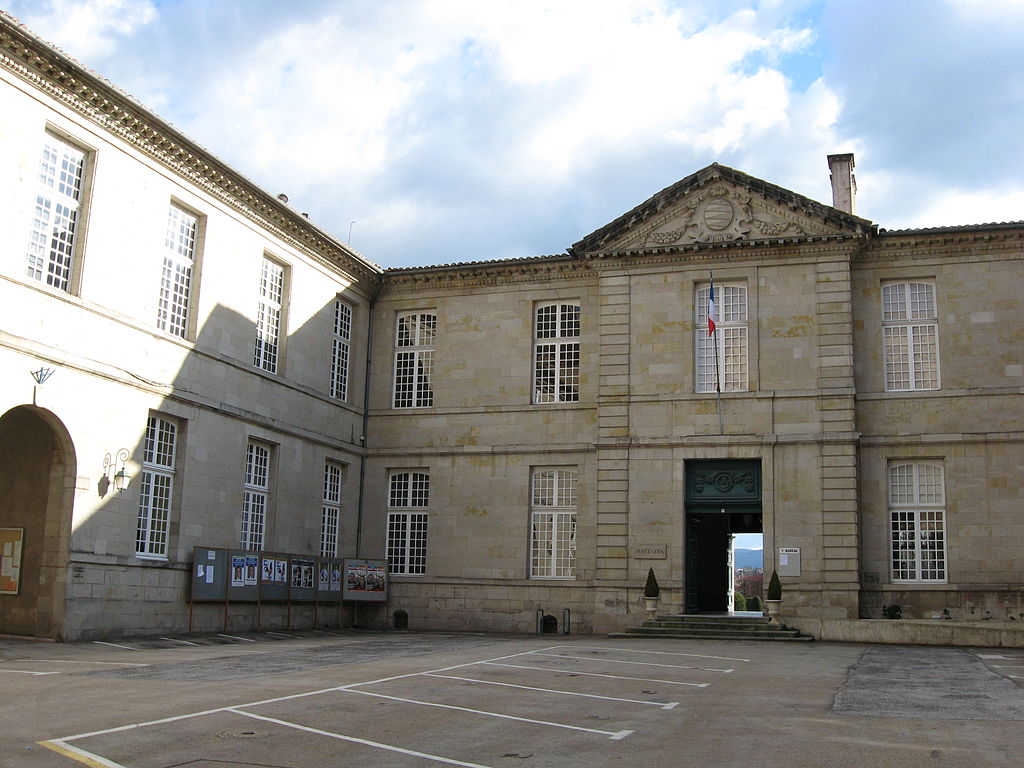


Bishop's Palace - Built in 1675 it was built by Mansart, the same man who was an architect for Versailles. It now houses the Goya Museum and holds the largest collection of Spanish paintings in France. 


Obsequiously - Characterized by or showing servile compalisance or defence; fawning; obedient; dutifulpontiff

Pontiff - A bishop; any high or chief priest; the Pope aka the Bishop of Rome


Florid - Very fancy or too fancy; having a red or reddish colour

Theramene - The tutor of Hippolyte from the play "Phedre"


Jean-Baptiste Racine.PNG
Jean-Baptiste Racine - (1639-1699) A French dramatist and one of the three great playwrights of 17th century France. The other two being Moliere and Corneille. Racine mostly wrote tragedies and he was accomplished at writing in alexandrine verse. His plays are very sparse and there is little action on stage. 


Phedre - A French dramatic tragedy in five acts, written in alexandrine verse by Jean Racine. It was first performed in 1677. The story was pulled from Greek mythology and the play didn't do well in its initial opening. This is because a rival group staged a play with practically the same story. Racine stopped writing plays after this work until commissioned by the king.

Peroration - To conclude a speech with a formal recapitulation; to speak at great length, often in a grandiloquent manner; declaim

Wheelwright - A person who builds or repairs wooden wheels. These tradesmen made wheels for carts and wagons. 

Enfant-Rouges - An orphanage where the children were dressed in red, the colour of charity. 

Mardi Gras - Part of Carnival celebrations. It begins on or after the Christian feast of the Epiphany and culminates right before Ash Wednesday. It translate directly to "Fat Tuesday" and reflects the practice of the last night of eating rich, fatty food before fasting for Lent. 

Thursday, July 07, 2016

The Annotated Les Miserables: Weeks 8 & 9


So....about three years ago maybe four, I decided to try and read this monster. I failed, more than once. But now I'm back and more focused. I've even got a schedule going. And considering how I started off posting annotations I thought I should see it through. 

If you're planning on reading this book for yourself I would suggest not reading any further if you don't want the book to be spoiled.

Start from the Beginning

Weeks 10 and 11


Pont-a-Mousson - An industrial town situated on the Moselle River. It contains several historical monuments including ones from the 18th century.

Charles Joseph Edouard Potier - (1806-1870) A 19th century French actor and playwright. He acted at the Theatre des Varietes, the Theatre du Palais-Royal and at the Theatre des Folies-Dramatiques. His plays were presented on various Parisian stages.

Theatre des Varietes - It was created by Marguerite Brunet. She was imprisoned for debt in 1803 by decree in 1806, she and her company were ordered to leave the Theatre du Palais-Royal. At the time that theater was called the name "Varietes." She didn't like having to leave and in 1807 she got an audience with Napoleon and received help and protection. Then she founded the new theatre.


Bolivar Arturo Michelena.jpg
By Arturo Michelena
Simon Bolivar - (1783-1830) He was Venezuelan involved in both the military and in politics, helping to establish Venezuela, Bolivia, Peru, Colombia, Ecuador and Panama as sovereign states. Growing up he spent some time in Europe where he was introduced to ideas from the Enlightenment, giving him the ideas of replacing the Spanish as rulers of several countries. He was President of Venezuela, Bolivia, Peru and Gran Colombia. 


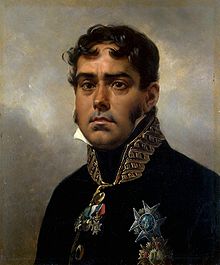
Pablo-morillo.jpgPablo Morillo y Morillo - He was a Spanish general that participated in the Battle of Trafalgar and fought against Bonaparte in the Peninsular War. After the war he was appointed Expedition Commander and General Captain of the Provinces of Venezuela. He then had to fight in a military campaign against Simon Bolivar's revolutionary armies. He would later meet Bolivar in Santa Ana when negotiating a six month truce.


"Curiosity is a form of gluttony: to see is to devour."
Eau de vie - Aka "water of life", it's known as a clear, colourless fruit brandy made by fermentation and double distillation. It typically has a very light taste. 

"An insult to me may be said to be my property. I can do what I like with it."

Peremptory - (esp. of a person's manner or actions) Insisting on immediate attention or obedience, esp. in a brusquely imperious way

Bas-reliefs - a kind of sculpture in which shapes are carved so that they are only slightly higher than the flat background

Rheims - It was founded by the Gauls and became a major city during the Roman Empire. It was also important because it was the traditional site where the kings of France where crowned. The Cathedral of Rheims is where the ceremony would take place. It also housed the Holy Ampulla containing consecrated oil allegedly brought by a white dove to the baptism of Clovis in 496. This oil was important for the anointing, the most important part of the coronation ceremony. 

Rene-Theophile-Hyacinthe Laennec.jpg
Professor Laennec - (1781-1826) Aka Rene-Theophile-Hyacinthe-Laennec. He was a French physician responsible for inventing the stethoscope in 1819 and pioneered its use in diagnosing various chest conditions. He developed the understanding of peritonitis and cirrhosis. He coined the term melanoma and described metastases of melanoma to the lungs.


Auscultation - It's listening to the internal sounds of the body, usually using a stethoscope. It's performed in order to examine the circulatory, respiratory and gastrointestinal systems.

Simon-pure - Genuinely and thoroughly pure. Superficially or hypocritically pure. 

Assizes - A trial session, civil or criminal, held periodically in specific locations by a judge of a superior court. An inquest before members of a jury or assessors; a judicial inquiry. 

Chary - Cautious; wary; Not giving or expending freely; sparing

Patois-speaking - It's non-standard French and regional languages such as Piard, Occitan, Franco-Provencal and Catalan. Many vernacular forms of English spoken in the Caribbean are referred to as Patois. Other examples are Trasianka, Sheng and Tsotsitaal.

Jean Massieu - (1772-1846) He was a pioneering deaf educator. He taught at the famous school for the deaf in Paris where Laurent Clerc was one of his students. He later founded a deaf school in Lille, France. 


Mairie - Mayor's office; town hall


"Nothing discernible to the eye of the spirit is more brilliant or obscure than man; nothing is more formidable, complex, mysterious, and infinite. There is a prospect greater than the sea, and it is the sky; there is a prospect greater than the sky, and it is the human soul." 

 Sophistry - Plausible but fallacious argumentation. A plausible but misleading or fallacious argument.


"The infinite space that each man carries within himself wherein despairingly he contrasts the movements of his spirit with the acts of his life is an overpowering thing." 
"Dante Alighieri found himself one day at a fateful doorway which he hesitated to enter We too are confronted by such a doorway, an we too must hesitate but enter none the less."  

Quixotry - A wild, visionary idea, an eccentric notion or act; a quixotism.

Recidivist - Repeated or habitual relapse, as into crime. The chronic tendency towards repetition of criminal or antisocial behaviour patterns. 


"Diamonds are to be found only in the darkness of the earth, and truth in the darkness of the mind."
Sepulchre - A tomb, grave or burial place.

Saturday, June 22, 2013

The Annotated Les Miserables: Weeks 6 & 7


Last year I tried to complete "Les Miserables" as part of a year-long read. I had barely started the book before life got in the way and I wasn't able to finish the story. This year I am determined to get through the entire thing. Here is the post I made at the beginning of my read and here is the one for Weeks 4 & 5. Below are notes to catalogue my read. At the moment it's mostly diction and events and persons I'm unfamiliar with. As I read further I hope to make posts filled with questions and insights into characters and plot points. Do not read this if you don't want the book to be spoiled.

Start from the Beginning

Weeks 8 and 9


Frans Hals circa 1649-1700
Rene Descartes - (1596–1650) He was a French philosopher, mathematician, and writer, dubbed the 'Father of Modern Philosophy'.  Much subsequent Western philosophy is a response to his writings, which are studied closely to this day.


Author unknown 1665
Baruch Spinoza - (1632-1677) He was a philosopher whose importance was not fully realized until years after his death. By laying the groundwork for the 18th century Enlightenment and modern biblical criticism including modern conceptions of the self and, arguably, the universe, he came to be considered one of the great rationalists of 17th century philosophy. His magnum opus, the posthumous "Ethics" in which he opposed Descarte's mind-body dualism, has earned him recognition as one of Western philosophy's most important thinkers.


Etching after portrait - de Reisner 
Marc-Antoine Madeleine Desaugiers - (1772-1827) He was a French composer, dramatist and song-writer.


Syllogism - A form of deductive reasoning consisting of a major premise, a minor premise and a conclusion. Ex. "No foxes are birds" "All parrots are birds" "No parrots are foxes"

Madeira wine - A fortified Portugese wine made in the Madeira islands. It's produced in a variety of styles ranging from dry wines which can be consumed on their own as an apertif, to sweet wines more usually consumed with dessert. 

Hetaera - An ancient Greek courtesan or concubine, especially one of a special class of cultivated female companions


Artist unknown
Apuleius - (125-180) He was a Latine prose writer who studied Platonist philosophy in Athens. Once he was accused of using magic to gain the attentions of a wealthy widow. He distributed a work he wrote in his own defense known as the Apologia.


Solomon - Also called jedidah. He was a walthy and wise king of Israel and a son of David. He is credited as the builder of the first Temple in Jerusalem. He is portrayed as wise but human and who sinned, turning away from Yahweh.

Amor omnibus idem - Love them all


Artist unknown
Aspasia - (470BCE-400BCE) A Milesian woman famous for her involvement with the Athenian statesman Pericles. Little is known about her life but she may have influenced Pericles and Athenian politics. She is mentioned in the writings of Plato, Aristophanes and Xenophon.


Copy of Ktesilas Artist unknown
Pericles -  (495BCE-429BCE) He was the most prominent and influential Greek statesman, orator and general of Athens during the Golden Age - specifically the time between the Persian and Peloponnesian wars.


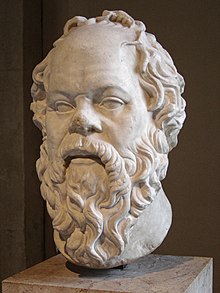
A bust of Socrates
A bust of Socrates in Louvre
Socrates - (470BCE-399BCE) A Classical Greek philosopher credited as a founder of Western philosophy. Socrates left none of his own writings as know about his mostly because of Plato's dialogues. He was put on trial and charged with corrupting the youth of Athens as well as impiety against the pantheon of Athens. HE was found guilty and drank hemlock and died. 


Manon Lescaut - An opera in fourt acts by Giacomo Puccini. The story is based on a novel by the Abbe Prevost.

Prometheus - A Titan from Greek Mythology, known as the deity who was the creator of mankind and its greatest benefactor. He stole fire from Mount Olympus and gave it to mankind. As a result he was punished by Zeus and chained to a mountain. Every day an eagle at his liver and every night it grew back. 

Goliath - A giant Philistine warrior defeated by David, the future king of Israel.

Polyphemus - A Cyclops from the "Odyssey". The son of Poseidon and Thoosa. He was a man-eater and starts devouring Odysseus' men. They sneak out with the sheep and Odysseus blinds him by outsmarting him.


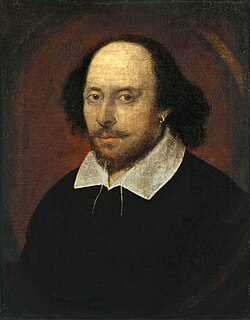
Shakespeare.jpg
The Chandos Portrait authenticity unconfirmed
William Shakespeare - (1564-1616) A poet, playwright and actor, often considered the greatest writer in the enlish language. He wrote 38 plays, 154 sonnets and 2 long narrative poems. 


Caliban - One of the main protagonists in William Shakespeare's "The Tempest" He was the son of the witch Sycorax. 

Fustian - A coarse sturdy cloth made of cotton and flax

Blackguardism - A foul-mouthed person; a scoundrel, a thoroughly unprincipled person.

Mademoiselle de Scuderi - A novella first published in 1819. Written by ETA Hoffman and is regarded as one of his best. It was an immediate commercial and critical success. This was mostly due to the suspenseful plot and interesting descriptions of life, places and people. 

"Pamela" or "Virtue Rewarded" - An epistolary novel (novel composed of a series of letteers) written by Samuel Richardson, first published in 1740. It tells the story of a beautiful 15-year old maidservant named Pamela Andrews, whose nobleman master, Mr. B, makes unwanted advances towards her after the death of his mother, whose maid she was since age 12.


Harridans - Stereotype of an unpleasant, belligerent, bossy woman. Synonymous with shrew. 

Physiognomist - A person who judges human character based on facial features. Divination based on facial features. 


Duke of Otranto, Joseph Fouche
Duke of Otranto - (1759-1820) Joseph Fouche was the first Duke of this line. It was a hereditary title in the nobility of the First French Empire. It was bestowed in 1808 by Napoleon upon statesman and Minister of Police, Joseph Fouche. 


Legion d'honneur - The highest French order for military and civil merits, established in 1802 by Napoleon Bonaparte. The order is divided into five degrees of increasing distinction: Knight, Officer, Commander, Grand Officer, Grand Cross. 

Grand Cross - The highest grade in many orders of knighthood. Sometimes they are referred to as "Commanders Grand Cross", "Nights Grand Cross", or just "Grand Crosses". 

Recondite - Little known or secret

Vetch - Any of several climbing plants of the legume family, bearing pealike flowers, esp. Vicia sativa, cultivated for forage and soil improvement

Barbary - A region of northern Africa on the Mediterranean coast between Egypt and the Atlantic Ocean. Settled by Berbers in the 2nd millennium, it was conquered by Arabs in the 7th century.  From the 16-19th c it was used as a base by pirates who raided ships in the Mediterranean and exacted tribute from the Ruopean powers trading in the area. 

"The supreme happiness in life is the assurance of being loved; of being loved for oneself , even in spite of oneself."
"Soul gropes for soul and finds it." 
"One would not exchange one's darkness for all light."
"We are radiant in our darkness." 
Faubourg - A district lying outside the original city limits of  French-speaking city of a city with French heritage. 

Savogards - A native of Savoy.

Calumny - A false statement maliciously made to injure another's reputation; slander; the utterance of maliciously false statements. 


"Animals are nothing but the portrayal of our virtues and vices made manifest to our eyes, the visible reflections of our souls."

Educable - capable of being educated or taught.

Garde Champetre - A garde champĂȘtre (rural guard) is the combination of a forest ranger, game warden and police officer in certain rural communes in France. Their job is to report to the local mayor. Many of these officers wear green uniforms and many carry firearms. They fall under the general supervision of the Gendarmerie.


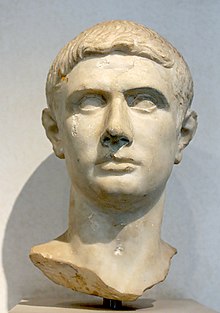
Portrait Brutus Massimo.jpg
Marble bust in National Museum of Rome
Marcus Junius Brutus - (85BCE?-42BCE) Roman statesman who, with Cassius, led the conspiracy to assassinate Caesar in 44BCE. He committed suicide after being defeated by Antony and Octavian at Philippi 42BCE.


By Achille Deveria 19thC
Eugene Francois Vidocq - (1775-1857) He was a French criminal and criminalist whose life story inspired several writers, including Victor Hugo and Honore de Balzac.  The former criminal became the founder and first director of the crime-detection Surete Nationale as well as the head of the first known private detective agendy.  Vidocq is considered to be the father of modern criminology and of the French police department. He is also regarded as the first private detective Vautrin.


By Karl Vogel Von Vogelstein ca1810
Joseph de Maistre - (1753-1821) He was a Savoyard philosopher, writer, diplomat and lawyer.  He defended hierarchichal societies and a monarchical state in the period immediately following the French Revolution. He called for the restoration of the Bourbons to the throne of France and argued that the Pope should have ultimate authority in temporal matters. He also claimed that the rationalist rejection of Christianity was directly responsible for the disorder and bloodshed which followed the French Revolution of 1789.


Cosmogony - Any scientific theory concerning the coming into existence (or origin) of either the cosmos (or universe), or the so-called "reality" of sentient beings

Gens Sans Aveu - Vagabonds

Law-Scrivener - A person who writes a document for another, usually for a fee

Louis d'or - The Louis d'or is any number of French coins first introduced by Louis XIII n 1640. The name derives from the depiction of the portrait of King Louis on one side of the coin; the French royal coat of arms is on the reverse. The coin was replaced by the French franc at the time of the revolution and later the similarly-valued Napoleon, although a limited number of Louis were also minted during the "Bourbon Restoration" under Louis XVIII.


"No one is more avidly curious about other people's doings than those persons whom they do not concern."

Fiacre - A small hackney coach

"An old woman who lived in the house taught her the art of living in penury. There are two stages - living on little, and living on nothing. They are like two rooms, the first dark, the second pitch-black."
"Winter! No warmth, no light, no midday morning merging into evening, fog, twilight and nohting to be clearly seen through the misted window. The sky had become a grating, the day a cellar, the sun a poor man at the door." 
Miliary - Accompanied by papules or vesicles resembling millet seeds.  


"Paupers cannot reach the end of their abode, or of their destiny, except by crouching ever lower."