“The poor man must walk to get meat for his stomach, the
rich man to get a stomach for his meat.”
This pamphlet was written by Benjamin Franklin under
the pseudonym of “Poor Richard”. A prototype of the Farmer’s Alamanac, it
contained a calendar, poems, a section on weather as well as astronomical and
astrological information.
The version I read contains ONLY the sayings. The majority
of them have fallen into obscurity and disuse but a few have survived intact
into modern times: “Haste makes waste” and “Well done is better than well said”
for example. On occasion the sayings are difficult to parse due to archaic
diction, religious references and the evolution of technology. Throughout the
book there are wood engravings, both pastoral and urban that break up the text.
The almanac was a popular work when it was published,
selling thousands of copies a year. Even Napoleon knew of the work as he had it
translated into Italian. As well a ship, gifted from Louis XVI to US naval
commander John Paul Jones, was renamed after Franklin, who happened to be serving
as Ambassador to France at the time.
It’s an interesting read but the full version of the almanac
may make for a more fulfilling read.
“Barren Lives” is set in 1940's Brazil and shows a migrant family
in the depths of poverty and what steps they take to survive.
I didn’t enjoy this movie. Every minute was agonizing and I
just wanted it to be over. But I didn’t hate it because that was the point. The
slow-moving plot, repressive heat, and the constant suffering of the family
made for a tough watch.
Director Nelson Pereira dos Santos makes you suffer
alongside the family to the point of exhaustion.
Every aspect of the film has been calculated to create a
depressive mood. Shot in black and
white, colour doesn’t exist in this world. Everything is dry like the creek bed
and deadly like the sun. The soundtrack is
minimal and the viewer will notice the silence in many scenes where there’s no
dialogue and only ambient sound. What
little music exists is mostly composed of a whining violin that persists like a
hungry mosquito. Long shots of repetitive motion show the monotony of their lives
and character flaws lead to tragic mistakes.
At every turn the family suffers. Whenever things go well, the
situation soon sours. The father finds employment but his boss underpays him. They’re
hired to look after cows but the drought starts to kill them. At times it seems
the whole world including the environment is against them.
As well violence can be found throughout the film both
visited upon and perpetrated by the family for survival and reveal the
harshness of the world.
I can’t say I’d recommend this movie because it wasn’t a
good watch. In fact, this review is meant to save you the 100 minutes I believe
you’d waste watching this. It was both brutal and interesting but not something
I would ever re-watch.
“Her head nested in spindly weeds;
beyond them the sky glowed preternaturally blue through the slats. As her
chewing slowed, she noticed a bee crawling along a blade of grass above her
head. She counted its stripes, amazed to see them juxtaposed with the stripes
of sky. The bees were a warning, the sky’s a promise she could not yet fathom,
and for a moment everything seemed connected, aching beauty and imminent
danger, the fragility of the bee and the scalded roof of her mouth, the transcendent
savor of bread and the fact that she was literally lying in a ditch.”
Tess Dombegh
is a problem child, the bad twin and a troublemaker. At least, that’s what her
family would have you believe. When in truth she’s felt overlooked in favour of
her “prettier, kinder” twin and her older half-dragon sister, endured years of
verbal abuse from her mother and was assaulted by someone she trusted.
Suffocated under the weight of familial expectations and forced to accept a
role she doesn’t want, Tess leaves home on the hunt for purpose and adventure.
The story is
decidedly mature with adult themes and situations and though it’s the third
book in the series, readers don’t need to start from the beginning to
understand the story. The world Hartman has built is full and populated with a
plethora of complex characters and memorable personalities. We’re also
introduced to a number of areas due to the distance Tess travels. This is all
held together by rich description and vivid imagery that bring the kingdom of
Goredd and its people to life.
Tess is a
flawed character and a refreshing change from the stereotype of a perfect
protagonist. She’s stubborn, has a temper and holds a grudge. Over the course
of the story we witness her grow and change in relation to her circumstances and
the people surrounding her. And thanks to length of the book, her character development
felt organic and realistic.
One thing
that would have made the story more comprehensive was a map. Without one it made
picturing Tess’ journey difficult. As well there were some spots where scenes
felt compressed or skipped over, such as at the monastery. Expanding these
scenes would have allowed for more character interaction as these settings
sometimes felt rushed through.
If you’re
looking for an engaging story set in a world populated by magic, dragons and
legends I would highly recommend you try this series.
An intrepid group of girls at sleepaway camp bond while
solving mysteries in the woods and encountering supernatural creatures. This
graphic novel has a Gravity Falls-esque feel to it and it all begins with a
fight against a pack of three-eyed foxes.
Thus begins the adventure as the five girls of Roanoke cabin
are left with a strange phrase and a golden eye that leads them past a river
monster, down into the earth and in direct confrontation with a troop of mind
controlled boy scouts.
The story is arranged in a unique way as if it’s been
stuffed into the middle of a field manual for the camp. Each chapter begins
with a page from the manual about a specific badge (all named using puns) and
ends with polaroids documenting their journey. It creates an immersive feel
that expands the world beyond the scope of the art and dialogue.
While it’s difficult to make this many characters distinctive
“Lumberjanes” accomplishes this and then some. All of the girls are different
with a variety of personalities and body types. And as the story begins in
medias res we learn who they are through action and dialogue. Apart from being
incredibly funny, the dialogue itself was fluid and an amusing substitute for
swearing and a shared catchphrase showed how closely the group had bonded.
The artwork was bright and colourful, which felt fitting in
terms of the ages of the characters and the supernatural elements of the story
and creatures encountered in their investigations.
The one drawback is that the felt cut off. The first chapter
is darn near perfect because it introduces us to the characters and the world
and ties up the adventure encountered within while leaving room for questions
and further exploration. The next three chapters are all tied together and
created more questions than it answered by the end of the story and I was left
feeling unsatisfied.
Apart from that one hiccup this was a great read and
introduction to a series that both amused and intrigued me.
This book is set in the same world as “The Lioness Rampant”
series, taking place several hundred years earlier, following Beka Cooper, a
poor girl living in Tortall. She joins the Provost’s Dogs to keep the peace and
soon discovers people who won’t be missed are disappearing. Thanks to her mysterious powers, a magical cat
and a stubborn streak a mile wide, she plunges headlong into a story that has
implications for the entire Lower City.
Beka is a flawed character which makes her actions and
dialogue that much more realistic. She has fears and doubts. She has trouble
doing her job at times because of communication. But through the course of the
book we see her adapt and evolve to her new situation and to those around her.
There are also some great well-rounded secondary characters
such as Beka’s mentors Tunstall and Goodwin and Rosto the Piper. Their
personalities are slowly revealed throughout the story and on occasion by third
parties. This made for a more organic experience rather than an infodump through
exposition.
As well the maps and appendix were much appreciated as the
book covers a lot of ground both geographically and linguistically. This helped
to physically center the reader and the addition of slang made the story more
immersive and showed how much world-building Pierce had put into the series.
One drawback that remained throughout the entire story was
the epistolary style. At times it got in the way of the story. In the beginning
I had to delve through three separate POV levels to get to Beka’s story which
was confusing and the result was it took longer to get into the story. As well
one diary entry contained a plethora of spelling errors which was distracting
and unnecessary. There are other better ways to communicate a person’s literacy.
The style was somewhat mitigated though by Pierce’s transitions between Beka’s
passive and active voice. She created a seamless shift between diary entries
and present action so that it’s unnoticeable and doesn’t interrupt the
narrative flow of the story.
If you’re a fan of Pierce or of the Lioness series I would
highly recommend this book as the beginning of an interesting new series.
Imagine a fairy tale where Cinderella plays the
villain, where the story begins as a romance but then slowly twists into a
horror movie. Lush costuming and soft colours hide a sinister aggression that
slowly unfolds over the course of the movie.
As with all Paul Thomas Anderson films, there is a soft
precision in “Phantom Thread” that confidently sets the viewer in the period,
allowing for the film to take other liberties that play against expectations.
The plot for example, lulls the viewer into a false sense of familiarity before
taking two separate twists that completely change the nature of the entire
film.
The two main characters Woodcock and Alma are layered with
multitudes, both equally fascinating and terrible in their own fascinating way.
Woodcock is petulant, exacting and unforgiving. He
doesn’t suffer fools, nor does he permit his routine to be interrupted for
anything or anyone. His attention to detail makes for an amazing designer with
impeccable clothing but an unapproachable grump in social situations. One needs
only look to how he treats his clients, his sister and even his muses to
understand how he views everyone else. Everything subservient to his work and
all who don’t lend themselves to this are anathema to him.
His strange relationship with his mother and sister seem
to have rippled out to affect how he treats all women and coaxed him to retreat
into himself and away from the world. It’s no coincidence that he lives in the
same house that he works in. It’s both economic but also safe and comfortable.
Some might say claustrophobic and stifling.
Alma is mysterious and her introduction would seem to
indicate that she’ll just be one more muse in Woodcock’s long line of discarded
women. At first she appears shy and clumsy, somewhat mousy and incredibly naïve
category. After all, what woman would agree to visit the house of a man she’s
just met or agree to strip down to her negligee for him? But as the film
progresses we learn that under the surface Alma, is far more devious and
sinister than at once conceived.
His previous pattern involved choosing a live dress-form to clothe and copulate with but Alma balks at this tight control. Here Alma
finds an ally in Cyril and isn’t so easily bullied. Oh she plays along as you
can see in the second breakfast scene. She butters her toast in silence and
moves with mute exactness. But as soon as she’s married she exaggerates her
former behaviour, possibly to play with her newfound power. And as Woodcock has
married her he seems incapable of even voicing his discontent. Instead we’re
left to watch him squirm as he likely never has in his entire life.
What he and the audience don’t notice is that she was
never weak or naive. She’s in fact very daring and it’s only when she starts to
push back against his routine, fights his wish to control her outer appearance
and inner thoughts that we see the real Alma. She forces Woodcock to
acknowledge their relationship when previously he made no concessions or allowances
for the women in his life, including his muses.
She is the aggressor, the one pushing for physical
intimacy while he’d rather work. Their relationship in fact is at first an
outgrowth of his work. He fits her for dresses, exhibits them and works under
his harsh gaze. But she wants more and won’t be bullied by either him or Cyril.
In fact she puts up with quite a lot of verbal abuse and refuses to leave when
her situation is made uncomfortable. In fact in the second half of the film the
balance of power shifts to her after she makes a drastic decision that moves
the film into uncharted territory.
Difficult to categorize but pleasurably unpredictable, “Phantom
Thread” is a quiet, unassuming film that hides a myriad of secrets that will
change how you view the characters.
This is sierra,
victor, whiskey. There’s been a breach. Fail-safe initiated. No matter the
outcome: Kill us…kill us all.”
In Northern California a military research facility is blown
up along with its staff in order to contain the experiments within. The precautions
fail however, unleashing a deadly cloud that destroys everything it touches.
Bad weather coupled with a lack of information has bureaucrats looking at a possible
nuclear option. Sigma Force must now
find a cure, traveling as far afield as the Amazon rainforest and Antarctica
for answers and a cure.
The book is part of a series but can be read as a stand-alone.
There will be references to past exploits and characters that can be confusing if
you haven’t read the previous books but it doesn’t detract from the plot.
As well I appreciated how much the book leaned on real
science for the foundation of the plot, addressing the ethical issues that can
arise in the face of new technology as well as showing what happens when
morality isn’t a consideration. For readers looking for an explanation of terms
there is an entire section in the Author’s Note dedicated to expanding on the locations,
history and science cited.
The main problem I had with the book was balance. While the
book doesn’t drag in terms of plot, which is appreciated, it’s so long and
unrelenting in terms of action that it gives readers no room to breathe.
Rollins weaves multiple storylines together to create a complex plot but at
times we jump around too much to stay grounded with one chapter being only five
pages long. Also almost every chapter ended on a cliff-hanger which while
exciting, also became predictable and exhausting. The pace of action never
lagged but at over 500 pages it was a slog to reach the end.
It was an entertaining read that immediately grabs the
reader and doesn’t let go. With a story and secrets that span centuries, this
book will keep you on your toes until the very end.
This book was received for free from LibraryThing’s Early
Reviewers in return for a review.
A book that provides life skills for a wide range of topics
with everything from stain removal to curing hiccups. Divided into sections
each topic carries do’s and don’ts as well as labeled diagrams to illustrate
each step. This is helpful for those who learn better through visuals rather
than by text alone.
Compact for storage, there’s a great section called “How to
Read this Book” as it’s not meant to be read front to back but instead used
when the situation arises. And if you think you’re already skilled enough and
wouldn’t glean anything new from this book there is a great way to slice onions
included inside.
There is room for improvement though. Some topics reference
other skills and use section numbers when really page
numbers would be more
helpful. As well, like activities should be grouped together. For example, bow
ties and ties are together but separate from ironing pants. Why not collect all
clothing skills together in one area to make them easier to find?
Intended for audiences of all ages, this book is useable in
a variety of situations.
This book was received for free from LibraryThing’s Early
Reviewers in return for a review.
In 1916 World War I, while raging, had devolved to attrition
in the trenches. Any news received from the front for public consumption was
censored, sanitized and reframed in such a way that most people on the home front
had no idea what conditions were really like. Fortunately soldiers kept
diaries, providing first-hand accounts of their own experiences. RH Rabjohn was
one such soldier, signing up at 18 with the Canadian Expeditionary Force. In
possession of an arts background he put his skills to use, illustrating what he
saw, seeing action in such battles as Vimy Ridge, Arras and Passchendaele.
His drawings have a kinetic feel to them, most with figures in
motion whether on the clock or on leave. But he doesn’t shy away from death or
the aftermath of battle. These scenes provide a real sense of the horror he and
others must have experienced, a true telling of the cost of war.
The book is divided up chronologically in terms of battles
and locations, allowing the reader to see what Rabjohn did and where he was.
This is further divided into categories such as “mud” and “POWs”. The book is
clearly an abridged version of the diary but it’s unclear if only sections with
accompanying illustrations were included or if the choice was random.
One confusing aspect was the font choice. Alongside the
diary entries are additional notes written by the book’s author. The entries
though use a more modern font while the author’s contributions look more
archaic. Normally I would have expected this to be reversed to reflect and
reinforce the differing time periods in which Rabjohn and Wilson wrote. The
fact that this isn’t the case, sometimes led me to start reading Wilson’s
portions as if they were Rabjohn’s.
Overall an enjoyable read that provided a personal look into
one soldier’s experiences, peeling back the layers of time on events quickly
receding into history.
This book was received for free from LibraryThing’s Early
Reviewers in return for a review.
He saw the expression
on Father Matthew’s face as Theodore stumbled over his broken sandal strap,
shot out his hand to save himself, and dropped the jug he was carrying. It was
smashing into tinkling fragments on the stone, in a puddle of warm fizzing beer
that splashed my lady’s elegant gown and my lord’s embroidered shoes. There was
a moment in which the universe stopped to allow for Brother Theodore’s mind to
reel is dismay, Father Matthew’s expression to change from mere resentment to
red-hot rage, and my lady to step back with a little, affected ‘Oh!’ of alarm.
Father Peregrine’s story continues in the second book of the
Hawk and Dove series where he faces a variety of new challenges, filled with
new and familiar characters that reveal the humanity and divinity present
within the life of a monastery. This is interspliced with the story of a modern
day family with each section relating to a parable within the Peregrine
sections.
Wilcock has a soft way of writing, with diction that gives a
warm, comfortable feel to the story. This, coupled with a variety of rounded
characters that aren’t all likeable, creates a richness in each vignette. Thankfully
this book can serve as a standalone, allowing readers to jump in at any point
in the series. Thanks to Wilcock’s references to earlier events, it’s not
necessary to have read the first book in the Hawk and Dove series to understand
characters or setting.
One concern was the form. This book would have been better
served if it had only focused on Father Peregrine. Every time the story
switches back to present day, it loses tension being less interesting than the
adventures of Peregrine. Currently they interrupt the narrative flow and pull
the reader out of the story. The message of the vignettes are obvious enough
that nothing would have been lost if these sections were eliminated.
Ultimately the best parts of the book are the scenes with Father
Peregrine. While the world is populated with unique characters and
personalities, it’s Peregrine that we identify with the most. He is the most interesting
of all the monks with his struggle with his own body and how he interacts with
the world and the people around him. Again and again he must use his sharp mind
rather than a strong body to defend himself and navigate the world. If you’re
interested in watching a man outsmart others on brainpower alone and spread
compassion wherever he can, check out this book.
I received this book as a giveaway through LibraryThing's Early Reviewers Program.
Warren the 13th has lived in his family’s hotel
his entire life. Run by his lazy uncle, the building has fallen into disrepair
and hasn’t seen a visitor in five years. Apart from trying to keep the place
together, Warren is also busy thwarting his new aunt from her obsessive search
for a legendary family heirloom, the All-Seeing Eye. One day after cleaning up
after her destructive behaviour, a stranger wrapped in bandages checks in. From
that moment on his life will never be the same again.
The gothic art style is reminiscent of Edward Gorey and the
illustrations not only helped set the mood but were also essential in the
telling of the story. Every chapter has a title page with gorgeous typography
and artwork that hint at what’s to come next. There’s also a secret message
hidden throughout the book that spells out where Warren’s going next. This fit
in with the mystery in the book as well as the graphical info in the
illustrations.
This story is filled with a variety of quirky characters
that lean towards the fantastical. There’s a witch who’s missing her voice, a
pirate who only comes ashore every ten years or so, a creature who speaks in
whistles and more. With each though we only get a taste of their background
along with an illustration, leaving the readers wanting more. Part of the
reason is the pace of the story. It moves so quickly that readers don’t spend
much time with anyone apart from Warren. There could easily have been another
hundred pages added onto the book to flesh out people and places.
Clearly this is only the beginning of Warren’s story as the
ending was left open with several plot threads unresolved. It will be
interesting to see where he goes next.
“As I walked home, I
turned back and saw through the trees again that window, ringing with clarity
and light above the dark grounds, the way the imagination shines above the dark
world, as inaccessible as love, even as it casts its light all around.”
Bobcat and Other Stories is a collection of seven short
stories. There is a softness to Lee’s writing and a melancholy that hangs over
the book. The stories themselves give the impression that there is a before and
after to each world, with the text nestled in between. It speaks to the skill of the author that Lee
was able to populate worlds that are larger on the inside. The reader only dips
in for a short moment in the lives of the characters but details in description
and dialogue create the idea that events will continue to unfold long after the
story is over. The endings however all have a truncated feel to them and rather
than creating a desire for more content, it left me with the idea that they
were incomplete or rushed.
Also the unity of voice throughout the stories was
appreciated because they helped to create a cohesiveness to the book overall. But
this also meant there was a tedious repetition to the protagonists in each
story to the point where it was difficult to distinguish between them. It
created the question of whether the stories were in some way connected as each
was told through a first person perspective with themes of deception, acadaemia,
familial discord and writing. It appeared to be too much of a coincidence to
keep finding similar ideas throughout each story but perhaps that was the
reason for them to be collected together in this manner. Instead the only
variance appeared to be in length of story. A wide array of characters and
plots would have done more to showcase Lee’s range and abilities.
This would be a great option for a rainy day coffee read if
you’re looking for some light and short reading.
Herein lies the heart and the soul of the
nations, their right to be free men, their desire to live in peace, their
courage to seek out the truth. Herein lies the Sword of Shannara.
Shea Ohmsford doesn’t know it yet but he’s the most important
person in the world. As the last descendant of Jerle Shannara he’s the only
person capable of wielding the Sword of Shannara, an ancient weapon that can
destroy the Warlock Lord. Unfortunately this makes him a target, forcing him to
flee home and confront his destiny.
It will be obvious to anyone who has read TheLord of the Rings that this is close to a carbon copy for the first
few hundred pages. Shea is joined by a disparate group of heroes consisting of
humans, elves, a wizard and a dwarf and it’s easy to recognize their parallel counterparts
in LOTR. Allanon is clearly a Gandalf remix as Balinor is for Aragorn. Palance is
a mix of Denethor and Theoden, Stenmin is Wormtongue, Orl Fane is Gollum. Shea
and Flick Ohmsford are Frodo and Sam, Menion is Legolas, Hendel is Gimli,
etc. As well there are various plot
points that are similar as well. There’s a chosen one, a reluctant hero, a fake
death, a dangerous lair and a magical device capable of defeating pure evil.
But while Tolkien clearly inspired aspects of plot and character,
Brooks does put his own personal spin on the story. There are a variety of
settings accompanied by good description that creates solid imagery for the
reader. As well, the backstory for this world is only hinted at but is enough
to understand a cataclysm befell Earth thousands of years ago and shows that
previous decisions are responsible for current events.
The story is fast-paced and keeps the reader on their toes
as circumstances can change within the space of a paragraph. That said at times
it’s at the expense of character growth. Menion seemingly falls in love in the space
of several days and there’s no reunion scene with Flick, Allanon and Eventine
after the elf king’s rescue which could possibly have been a great scene.
Several times throughout the story the plot will leapfrog over what appear to
be great setups for dialogue or exposition that could further the plot. These
missed opportunities are a shame considering how many characters Brooks has
that require good progression and development.
I thought it highly amusing that shortly after finishing the book a trailer came out for a movie based on Fawcett's life and adventures. It will be interesting to see how accurately they stick to the original story. From the casting it looks like they're going to stick with one of Fawcett's earlier adventures.
Percy Harrison Fawcett, renowned Amazon explorer, was most famous not for his many expeditions and contributions to the mapping of the Amazon but for his disappearance. Having departed along with his eldest son in search of the fabled city of “Z” in 1925 he was never heard from again. His absence resulted in various rescue expeditions with most invariably vanishing into the jungle, possibly leading to the deaths of up to 100 people with no one any closer to discovering the fate of Percy’s last expedition. Cut to 2009 when journalist David Grann also falls under the spell of Fawcett and the Amazon. He too lands in the jungle, determined to find out truth.
Much like “Into Thin Air”, author David Grann divides the book up into his own adventures and a history of Fawcett’s. This helps provide a background on the explorer as well as the challenges and perils of the Amazon.
Fawcett is a surprising character and largest than life. He was apparently the inspiration for Sir Arthur Conan Doyle’s character Professor Challenger in “The Lost World”. On expeditions he appeared practically immune to the diseases and illnesses that plagued his companions. Luck and speed helped bolster his reputation, earning him a Founder’s medal and a well-respected name among the Royal Geographical Society as an Amazonian expert.
His travels though were interrupted by World War I and he spent years planning and dreaming of finding traces of a lost civilization in the jungle on the same scale as Machu Picchu. All the while he’s getting older, technology is shrinking the world and he’s being slowly but inexorably pushed out of his field by men with degrees in the emerging field of modern anthropology.
The book was engaging despite the interruption in narrative to switch between Fawcett and Grann’s stories. It was also interesting to see how expeditions and the jungle changed over time due to the evolution of technology and modernization. While not every question was answered, Grann provides a satisfactory ending that would surely have pleased Fawcett himself.
Louise Banks (Amy Adams) is a linguist and university professor trying to teach a class when news breaks that a ufo has touched down in Montana, causing no little amount of panic among her students, her mother and humanity in general. She seems unphased though and images hint at a tragedy that may be taking up more space in her thoughts.
Despite her preoccupation though she’s contracted by the military to help communicate with the aliens thanks to her translation skills. Joined by theoretical physicist Ian Donnelly (Jeremy Renner) she must learn their language in order to find out why they’re here. Timing is everything though as eleven other ships have landed all over the world with eleven other governments trying to do the same thing Banks is.
The aliens are well-conceived in that they are so ‘other’ from what we are. Their appearance, their speech, their language and the way they perceive the world are entirely differently. They aren’t a facsimile of humans in any way.
As well, beautiful cinematography is paired with an evocative soundtrack but those aren’t the reasons you’ll want to rewatch this. There’s a twist at the end that will make you think and without giving anything away the circular theme found throughout was appreciated as was the communication versus action aspect of the story.
The pace does slow down in the middle considerably which accompanied by long shots and a lack of physical action made the film drag. Also, Renner’s character felt wasted. It would have made more sense for his character to be a fellow linguist than a theoretical physicist as his skills aren’t utilized to the same level as Banks’. Seeing them collaborate over language would have made their bond more believable as the chemistry between the two was lacking.
If you’re interested in a sci-fi story that will cause discussion after the film, try this one on for size.
“There
were many, many fine reasons not to go, but attempting to climb Everest is an
intrinsically irrational act—a triumph of desire over sensibility. Any person
who would seriously consider it is almost by definition beyond the sway of
reasoned argument.”
Jon Krakauer, journalist for the adventure magazine Outside, was hired to document an
expedition to Mt. Everest in 1996. What he couldn’t know was that by the end of
the expedition, eight people would be dead and he would be left with a very
different story than what he originally planned.
We begin with the victory of Krakauer summiting the mountain,
quickly followed by ominous words that presage what’s to come. But instead of
heading straight into the disaster we know is coming, we’re given a history
lesson on Mt. Everest instead. The book provides a mass of information on the
dangerous of climbing and what summiting Everest requires in terms of equipment
and fortitude. It also touches on Mallory and Irvine and Hillary and Norgay,
building a solid foundation on the history of the mountain and how climbing has
evolved over the years. Today it’s a commercial operation where inexperienced
clients can add to the risk of climbing, endangering not only themselves but
also guides and Sherpas.
In stories where the outcome is already known the ‘what’ becomes
less important than the ‘why’ and ‘how’. Before reading this book I already
knew it involved death and that things were going to go very wrong for a large
number of people trying to ascend the mountain. This left me to discover the
details around the larger story. Told in hindsight, it creates a growing
anxiety as an accumulation of small problems and mistakes leads our climbers
towards a slow but inevitable plod towards doom. It was unnerving, knowing some
of the people I was reading about would never go home, that I was essentially
reading about ghosts.
Finishing this book I was left with one question. What is a
human life worth? I already knew the story was a tragedy but I had no idea how
the actions of some climbers would horrify and depress me. The actions and
mistakes made along the way were one thing but to discover that climbers were
left for dead, that others passed them by on the way to the summit or believed
they were beyond help was sickening. It seemed callous and possibly criminal to
make no attempt at saving a fellow climber and human being. The excuses made in
the book were myriad. “We didn’t know them.” “It’s dangerous to help others at
this altitude.” “I was worried for my own life.” But at what point does someone
become culpable? They may not have had an active hand in their deaths but what
if they could have been saved? Krakauer on other dwell on this, second-guessing
themselves, wondering what might have been.
“The
plain truth is that I knew better but went to Everest anyway. And in doing so I
was a party to the death of good people, which is something that is apt to
remain on my conscience for a very long time.”
"Well, let's put it this way, you'll be a major by nightfall or dead."
No one knows the story how of a group of Germans invaded Britain for the sole purpose of kidnapping Winston Churchill. All that remains is a concealed gravestone dedicated to a unit of Germans paratroopers in a British churchyard. The truth is a closely guarded secret by the citizens of Studley Constable, a village that was the epicentre of the most daring raid of the entire war.
Having never read Higgins before, I had no expectations in reading this book. But I can honestly say this was a poignant, entertaining and exciting read. As a result I can't wait to read more of his works.
There's a variety of characters, all with depth, personality and a derth of needs and wants. Surprisingly enough, the majority of the story is told from the perspective of the antagonists. This is counter to what you would normally expect. Much like "Bel Canto" and "House of Cards", the writing convinces the reader to essentially sympathize with the villain(s) of the story.
Also, in most stories the tension is derived from not knowing how it all ends. This has all been avoided here as the book was written as frame story, meaning we already know how it ends. This can often be a risky idea as it often deflates interest but if done well, it draws readers in by focusing on how and why events end the way they do. Instead of concerning themselves with the end of the story, readers are more interested in the journey/middle.
Truthfully the majority of the action takes place in the last 50-100 pages but I was never bored or frustrated by this. Higgins slowly moves the playing pieces into place. He slowly builds the plot, interweaving plotlines until you can see the inexorable disaster looming in the distance, forcing the reader to continue, already knowing the outcome.
If you enjoy WWII stories filled with intrigue and like a bit of a twist on the traditional 'hero' story, check out this book.
So....about three years ago maybe four, I decided to try and read this monster. I failed, more than once. But now I'm back and more focused. I've even got a schedule going. And considering how I started off posting annotations I thought I should see it through.
If you're planning on reading this book for yourself I would suggest not reading any further if you don't want the book to be spoiled. Start from the Beginning
Tilbury - A light, open, two-wheeled carriage, sometimes with a top, sometimes without. It was developed in the 19th century by the Tilbury company in London. They were coachbuilders. The vehicle was considered fast, light, sporty and dangerous. Gig - Also called a chair or chaise, it's a light, two-wheeled cart pulled by one horse. Travelling at night they would usually carry two oil lamps known as gig lamps. Traditionally it's more formal than a village cart or a meadowbrook cart. A light gig can be used for carriage racing.
"To journey is to be born and die each minute."
"All the elements of life are in constant flight from us, with darkness and clarity intermingled, the vision and the eclipse."
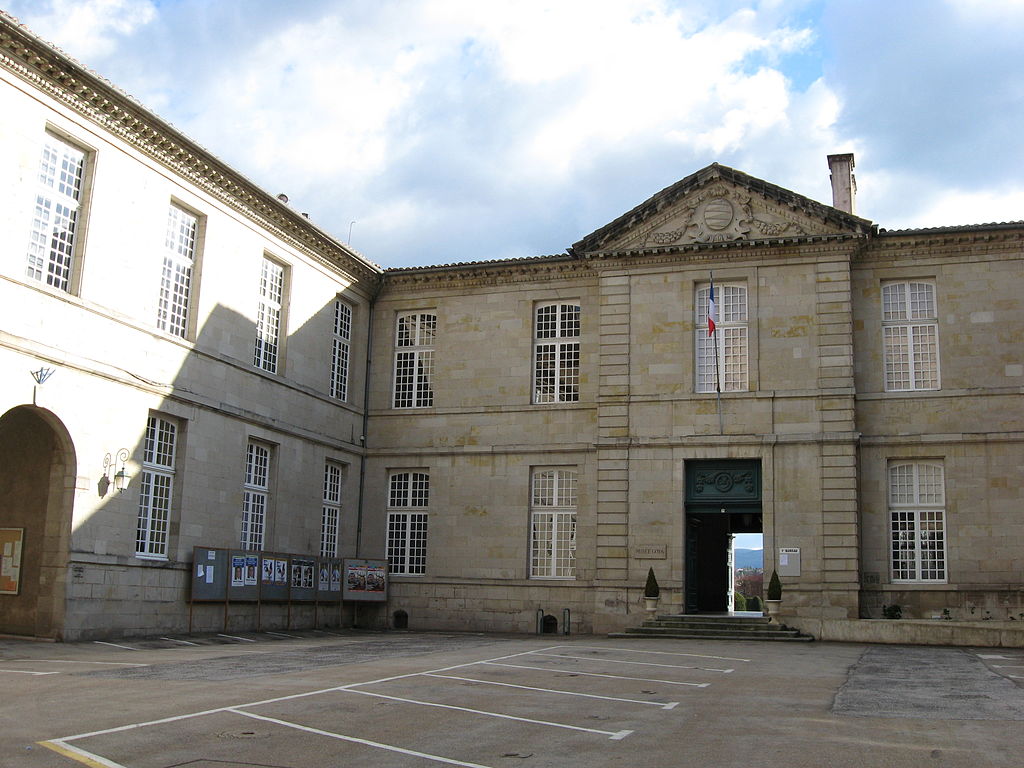
Palais du Justice - Among the oldest surviving buildings of the former royal palace. The justice of the state has been dispensed here since medieval times. It was also the seat of Parliament from the 16th century to the French Revolution. It was reconstructed between 1857-1868.
Bishop's Palace - Built in 1675 it was built by Mansart, the same man who was an architect for Versailles. It now houses the Goya Museum and holds the largest collection of Spanish paintings in France.
Obsequiously - Characterized by or showing servile compalisance or defence; fawning; obedient; dutifulpontiff Pontiff - A bishop; any high or chief priest; the Pope aka the Bishop of Rome Florid - Very fancy or too fancy; having a red or reddish colour Theramene - The tutor of Hippolyte from the play "Phedre" Jean-Baptiste Racine - (1639-1699) A French dramatist and one of the three great playwrights of 17th century France. The other two being Moliere and Corneille. Racine mostly wrote tragedies and he was accomplished at writing in alexandrine verse. His plays are very sparse and there is little action on stage. Phedre - A French dramatic tragedy in five acts, written in alexandrine verse by Jean Racine. It was first performed in 1677. The story was pulled from Greek mythology and the play didn't do well in its initial opening. This is because a rival group staged a play with practically the same story. Racine stopped writing plays after this work until commissioned by the king. Peroration - To conclude a speech with a formal recapitulation; to speak at great length, often in a grandiloquent manner; declaim
Wheelwright - A person who builds or repairs wooden wheels. These tradesmen made wheels for carts and wagons. Enfant-Rouges - An orphanage where the children were dressed in red, the colour of charity. Mardi Gras - Part of Carnival celebrations. It begins on or after the Christian feast of the Epiphany and culminates right before Ash Wednesday. It translate directly to "Fat Tuesday" and reflects the practice of the last night of eating rich, fatty food before fasting for Lent.
So....about three years ago maybe four, I decided to try and read this monster. I failed, more than once. But now I'm back and more focused. I've even got a schedule going. And considering how I started off posting annotations I thought I should see it through. If you're planning on reading this book for yourself I would suggest not reading any further if you don't want the book to be spoiled. Start from the Beginning
Pont-a-Mousson - An industrial town situated on the Moselle River. It contains several historical monuments including ones from the 18th century. Charles Joseph Edouard Potier - (1806-1870) A 19th century French actor and playwright. He acted at the Theatre des Varietes, the Theatre du Palais-Royal and at the Theatre des Folies-Dramatiques. His plays were presented on various Parisian stages. Theatre des Varietes - It was created by Marguerite Brunet. She was imprisoned for debt in 1803 by decree in 1806, she and her company were ordered to leave the Theatre du Palais-Royal. At the time that theater was called the name "Varietes." She didn't like having to leave and in 1807 she got an audience with Napoleon and received help and protection. Then she founded the new theatre.
By Arturo Michelena
Simon Bolivar - (1783-1830) He was Venezuelan involved in both the military and in politics, helping to establish Venezuela, Bolivia, Peru, Colombia, Ecuador and Panama as sovereign states. Growing up he spent some time in Europe where he was introduced to ideas from the Enlightenment, giving him the ideas of replacing the Spanish as rulers of several countries. He was President of Venezuela, Bolivia, Peru and Gran Colombia.
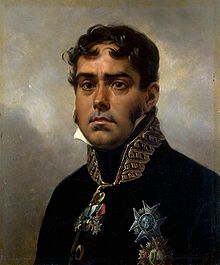
Pablo Morillo y Morillo - He was a Spanish general that participated in the Battle of Trafalgar and fought against Bonaparte in the Peninsular War. After the war he was appointed Expedition Commander and General Captain of the Provinces of Venezuela. He then had to fight in a military campaign against Simon Bolivar's revolutionary armies. He would later meet Bolivar in Santa Ana when negotiating a six month truce.
"Curiosity is a form of gluttony: to see is to devour."
Eau de vie- Aka "water of life", it's known as a clear, colourless fruit brandy made by fermentation and double distillation. It typically has a very light taste.
"An insult to me may be said to be my property. I can do what I like with it."
Peremptory - (esp. of a person's manner or actions) Insisting on immediate attention or obedience, esp. in a brusquely imperious way Bas-reliefs- a kind of sculpture in which shapes are carved so that they are only slightly higher than the flat background Rheims- It was founded by the Gauls and became a major city during the Roman Empire. It was also important because it was the traditional site where the kings of France where crowned. The Cathedral of Rheims is where the ceremony would take place. It also housed the Holy Ampulla containing consecrated oil allegedly brought by a white dove to the baptism of Clovis in 496. This oil was important for the anointing, the most important part of the coronation ceremony.
Professor Laennec - (1781-1826) Aka Rene-Theophile-Hyacinthe-Laennec. He was a French physician responsible for inventing the stethoscope in 1819 and pioneered its use in diagnosing various chest conditions. He developed the understanding of peritonitis and cirrhosis. He coined the term melanoma and described metastases of melanoma to the lungs. Auscultation - It's listening to the internal sounds of the body, usually using a stethoscope. It's performed in order to examine the circulatory, respiratory and gastrointestinal systems. Simon-pure - Genuinely and thoroughly pure. Superficially or hypocritically pure. Assizes - A trial session, civil or criminal, held periodically in specific locations by a judge of a superior court. An inquest before members of a jury or assessors; a judicial inquiry.
Chary - Cautious; wary; Not giving or expending freely; sparing Patois-speaking - It's non-standard French and regional languages such as Piard, Occitan, Franco-Provencal and Catalan. Many vernacular forms of English spoken in the Caribbean are referred to as Patois. Other examples are Trasianka, Sheng and Tsotsitaal. Jean Massieu - (1772-1846) He was a pioneering deaf educator. He taught at the famous school for the deaf in Paris where Laurent Clerc was one of his students. He later founded a deaf school in Lille, France.
Mairie - Mayor's office; town hall
"Nothing discernible to the eye of the spirit is more brilliant or obscure than man; nothing is more formidable, complex, mysterious, and infinite. There is a prospect greater than the sea, and it is the sky; there is a prospect greater than the sky, and it is the human soul."
Sophistry - Plausible but fallacious argumentation. A plausible but misleading or fallacious argument.
"The infinite space that each man carries within himself wherein despairingly he contrasts the movements of his spirit with the acts of his life is an overpowering thing."
"Dante Alighieri found himself one day at a fateful doorway which he hesitated to enter We too are confronted by such a doorway, an we too must hesitate but enter none the less."
Quixotry - A wild, visionary idea, an eccentric notion or act; a quixotism. Recidivist - Repeated or habitual relapse, as into crime. The chronic tendency towards repetition of criminal or antisocial behaviour patterns.
"Diamonds are to be found only in the darkness of the earth, and truth in the darkness of the mind."